Mythbusters: The Ferrari V6
The Story of the Ferrari V6
Ferrari is widely known for its legendary V12 engines, but the V6 holds just as much significance—backed by a powerful emotional story. The idea for the V6 came from Enzo Ferrari’s son, Alfredo “Dino” Ferrari, a talented engineer with a clear vision for the brand’s future. Dino’s life was tragically cut short by illness in 1956, but even in his final days, he remained committed to developing a new V6 engine for Formula 2. From his hospital bed, he worked closely with Vittorio Jano—Ferrari’s chief engineer and Enzo’s longtime collaborator—to refine the technical details. In a poignant parallel, Jano had also lost his son at a young age, giving the project a deeper personal meaning. The V6 would go on to carry Dino’s name, becoming a lasting tribute to his passion and legacy.
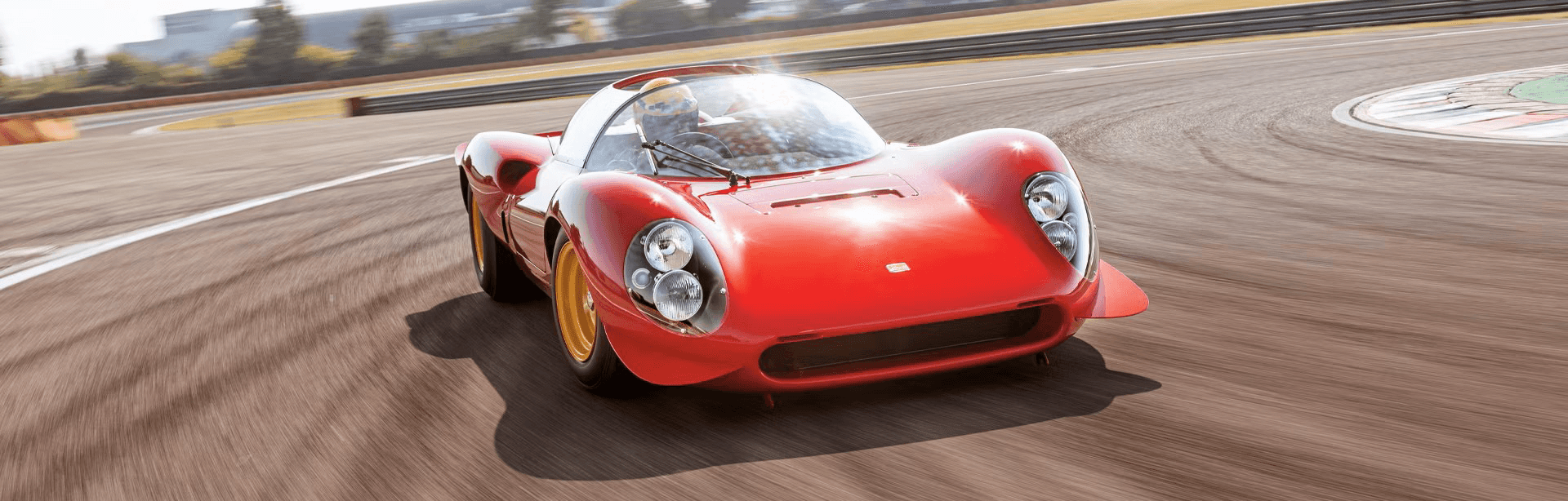
The result was the Dino V6—a 1.5-litre engine first used in the sleek Dino 156 F2. Luigi Musso secured a podium at the 1957 Naples GP, with more success following in Modena. The engine evolved to 2,417cc and powered the 246 F1 in the 1958 Formula One season. It became the first V6 to win a Grand Prix, with Mike Hawthorn’s victory at the French GP—a race marked by triumph and tragedy, as it was Fangio’s last and Musso’s final. Hawthorn later clinched the World Championship, making history for both Ferrari and the V6.
Though Enzo Ferrari once quipped that “the ox pulls the cart, it doesn’t push it,” he soon accepted that mid-engined cars were the future of Formula One. A prototype debuted at the 1960 Monaco GP, driven by Wolfgang von Trips and powered by Ferrari’s familiar 2.5-litre V6. Later that year, a modified version with a 1.5-litre engine won the F2 class at the Italian GP.
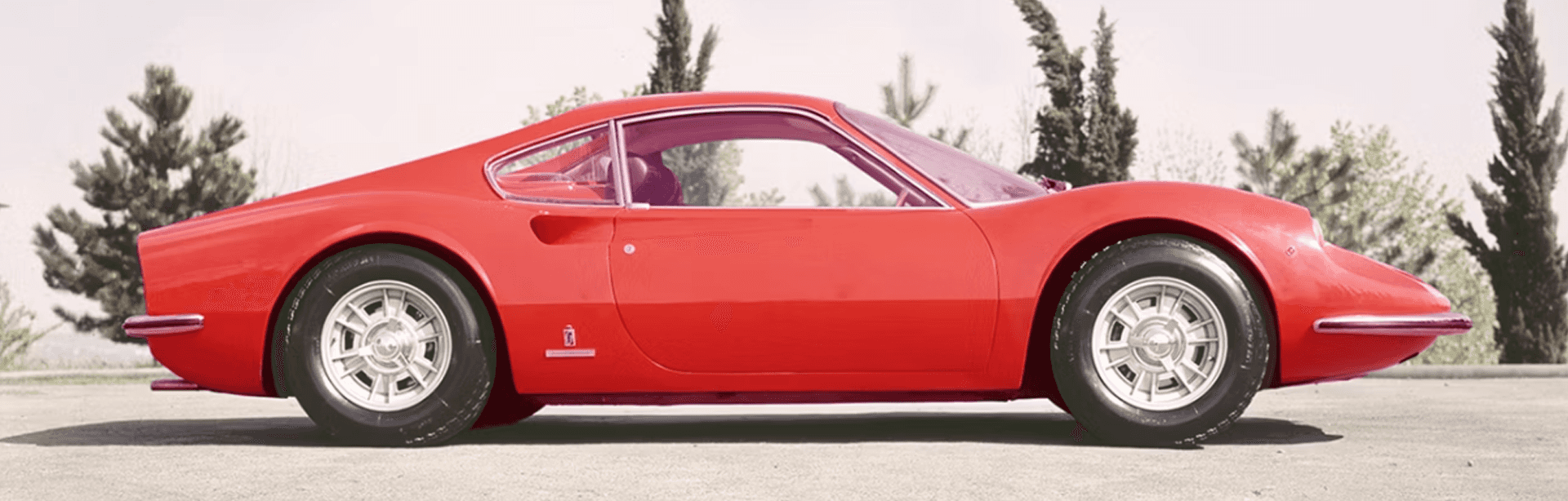
The Dino road car, introduced in 1967, marked a turning point for Ferrari. Despite Enzo Ferrari’s lingering doubts about the practicality of a mid-engined layout for road use, a series of Pininfarina-designed concepts helped pave the way to production. The final car—never officially badged as a Ferrari—has since become one of the brand’s most beloved models.
Though the 206 GT and later 246 GT may appear similar, they differ notably in both design and character. Even the 246’s larger 2.4-litre engine needs to be worked hard to deliver its best—accompanied by a lively, high-revving soundtrack that makes the effort a joy. Just 150 examples of the 206 GT were built, giving it rare status compared to the more than 3,500 246s produced. Still, both offer a distinctly rich six-cylinder driving experience that stands apart in Ferrari history.
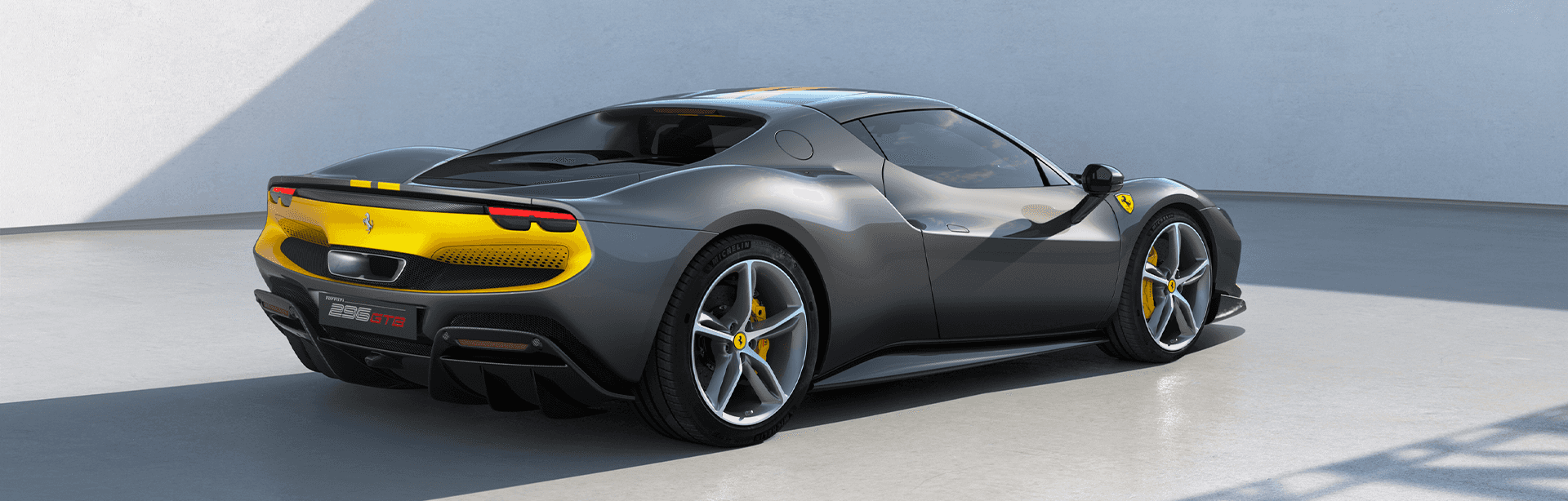
It would also be the last V6 to appear in a Ferrari road car until 2022’s 296 GTB. With its 120-degree cylinder angle, compact electric motor, and 7.45 kWh battery, the 296’s 3.0-litre, 830cv unit builds on know-how accumulated by Ferrari’s F1 team in the modern hybrid and turbo era. In many ways, it exemplifies everything Ferrari stands for, a supreme technical achievement that obviates the need for 12 cylinders.
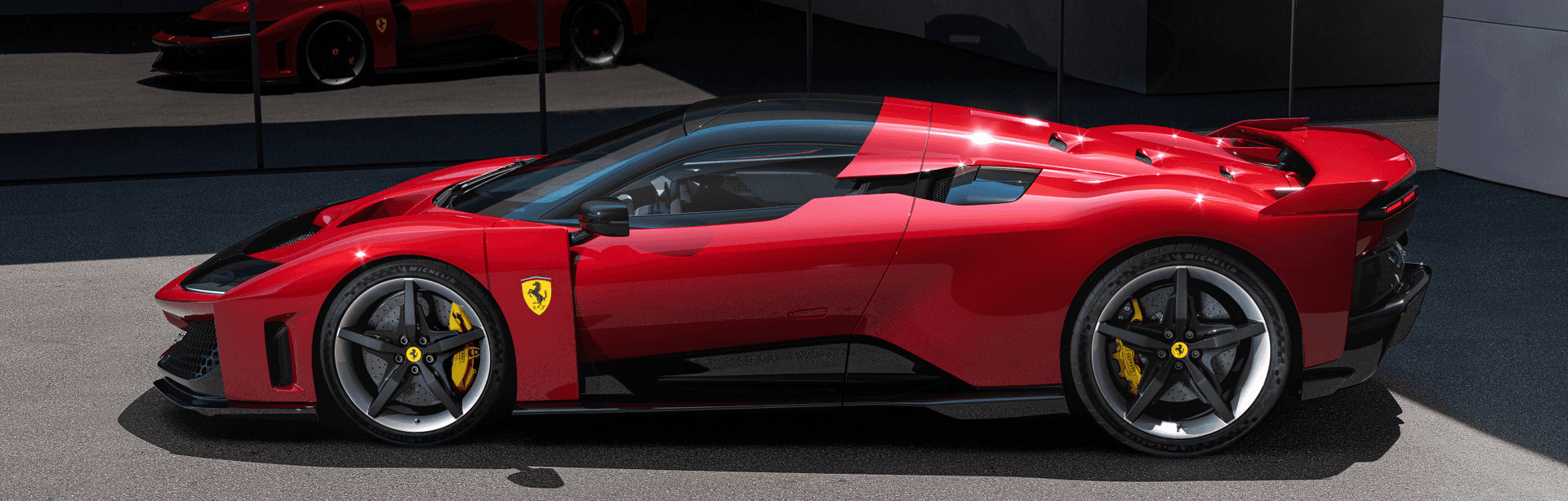
That’s a philosophy echoed in the latest Ferrari hypercar, the F80, whose engine is derived directly from the unit that has taken Ferrari to victory in the WEC, including multiple wins in the Le Mans 24 Hours. The story has come full circle: seven decades since the first Ferrari V6, the most compact engine in the range now powers the most potent Ferrari road car ever.